Going Home

Downtown Fort Wayne (Credit: Downtown Fort Wayne Instagram)

For some reason, my trips home always seem to come at the perfect time. I am feeling overwhelmed with a class, struggling with a relationship, unsure of the next steps in my academic or professional career, or feeling increasingly alienated from my faith and faith communities. Then, I have a break. Fall break, Thanksgiving break, Christmas break. I load up my car, lock up my place, and start the now-familiar trip back home. 

I cruise down I-69 headed north from Indy and see “The Best Chocolate is Found in Uranus” billboard off the side of the road, roll my eyes, and realize, “yep, I’m definitely getting close to home.” As my car turns onto Lexington Avenue and passes the old campus of Taylor University Fort Wayne, the place my parents met, I know that I am seconds away from the loving embrace of my two favorite people.

Last year, I made a detour on Thanksgiving break to see my girlfriend before returning to Fort Wayne for the week. While together, we decided things weren’t working out with a long-distance relationship and we broke up. That, along with the difficult semester at IU, left me feeling lost. The small kindness of it all was that I got to go home for the next week; I got to see my parents and my friends, the people who know me best. I could surround myself with the people who have known me the longest and they could remind me who I was, that maybe I wasn’t so lost after all. 

This year it’s nothing that dramatic. The week at home seemed quiet but also busy at the same time with last-minute plans and a “just one more quick lunch.” Still, there were a few things I needed advice on, a few things that have been weighing heavily on my mind. So, I turned to the people I trust to seek their counsel. 

It’s weird. For the last year and a half, Bloomington has been my home in every sense of the word. It is where I live and work. I have friends and connections here, activities I do on the weekends, and responsibilities. When I come back to my studio apartment after a trip, I feel like I am walking into my home, a place that holds so many memories—both good and bad—and a place that I have formed into my own sanctuary of sorts. Still, there is always that desire for home, my other home. When I feel like I am losing myself, I return home to be reminded of who I am. 

Before I left for college, I received periodic reminders from people to “be careful at college” and “don’t let those liberals lead you astray.” While the crux of the sentiment leaves me rolling my eyes, there is, surprisingly, some truth to these thoughts. There are times at IU when I forget myself. I get discouraged and I forget why I am here. I become overwhelmed by the routine and struggle to see the goal I am working toward. I start to lose my identity and purpose. Not in the cringeworthy “you are going to become one of those crazy liberals if you aren’t careful” way, but in the “does what I’m doing here matter?” way. 

Then, I return home to be reminded of who I am. When I see my parents, I see myself. I am the son of a woman who is unfailingly kind—to a fault—but not afraid to stand up for herself, others, or what she believes, being direct and firm if necessary. She is fiercely intelligent and uncommonly caring. I am the son of a man who loves and serves people wholly and completely. He reminds me of the humor of life through his constant ornery spirit and he shows me how to be a hard worker no matter what life throws my way. I carry their legacy with me wherever I go—no matter how far I am from home.

Then, there are the places. There is the courthouse where downtown Fort Wayne stood still and silent while my uncle, an Allen County Sheriff’s officer, received his final radio call before he was laid to rest. There is the YMCA where I poured my fresh grief and anger onto the basketball court after my grandfather’s unexpected death in 2018 because I had nowhere else to turn. There is the Five Guys in Times Corners, Pawpaw and I’s favorite restaurant, that brings back a flood of memories every time I pass it on the way to my grandma’s house where an empty chair reminds me how short our time together is. There is the church next to the mall where I met my best friends and memorized pages and pages of Bible verses, verses that cause me to cling to my faith today despite all odds. There is my grandparents’ house, warm and filled with love—and good baking. There is my friends’ apartment, a place that has felt like a second home to me over the past few years since I helped them move in July 2020, where I join in a poker game and loving community whenever I am home. There is the downtown Starbucks, a place where I have laughed, cried, and created some of my favorite memories with my mom. There is the church I worked at for six years with my dad, the Panera where I had my first date, the mall I have spent hours roaming around with my best friends, and the McAlister’s my dad and I have spent hours at, drinking tea and talking about life. 

Sometimes, I just need to return to these places and these people. I need to be reminded of the memories—both good and bad—that shaped me into who I am today. I need to see the people there. As much as the conservative Christian spaces I came from in Fort Wayne often frustrate me, there is still a deep need in my heart to return and see the people there. There is a sort of tension that exists. While I acknowledge that I’ve changed since I left and I will probably never call Fort Wayne my physical home again, there is still part of my heart that lives with the city and the people there and it always will.

So, I return. I see the people I love. I have conversations that remind me of who I am and why I am where I am. I see people who remind me of the example that I am striving toward, and I see others who remind me of the type of person I am so desperately trying not to be. And, frankly, I need both. As I grow older, I am starting to realize that life is complicated, imperfect, and rarely black and white. Still, I am too much like my mother; I want things to be nice, neat, and organized. I want them to fit into their assigned boxes and stay there. But this is impossible. Life is just too messy, too wild, and too complicated. Maybe, if nothing else, these trips remind me that it’s okay not to have it all figured out and for life to be messy. It’s okay to struggle and not always know what I am doing. It’s okay to be me and know that I am enough as I am. It’s almost ironic that a place I spent so much time planning to run away from would still leave such a hold on me—even after I left. 

Thanks for everything, Fort Wayne. I’ll be back again soon. 

With all my love, 


Zeb

Where Do We Go From Here? Some Thoughts on Jesus and John Wayne and My Own Experience with White Evangelicalism

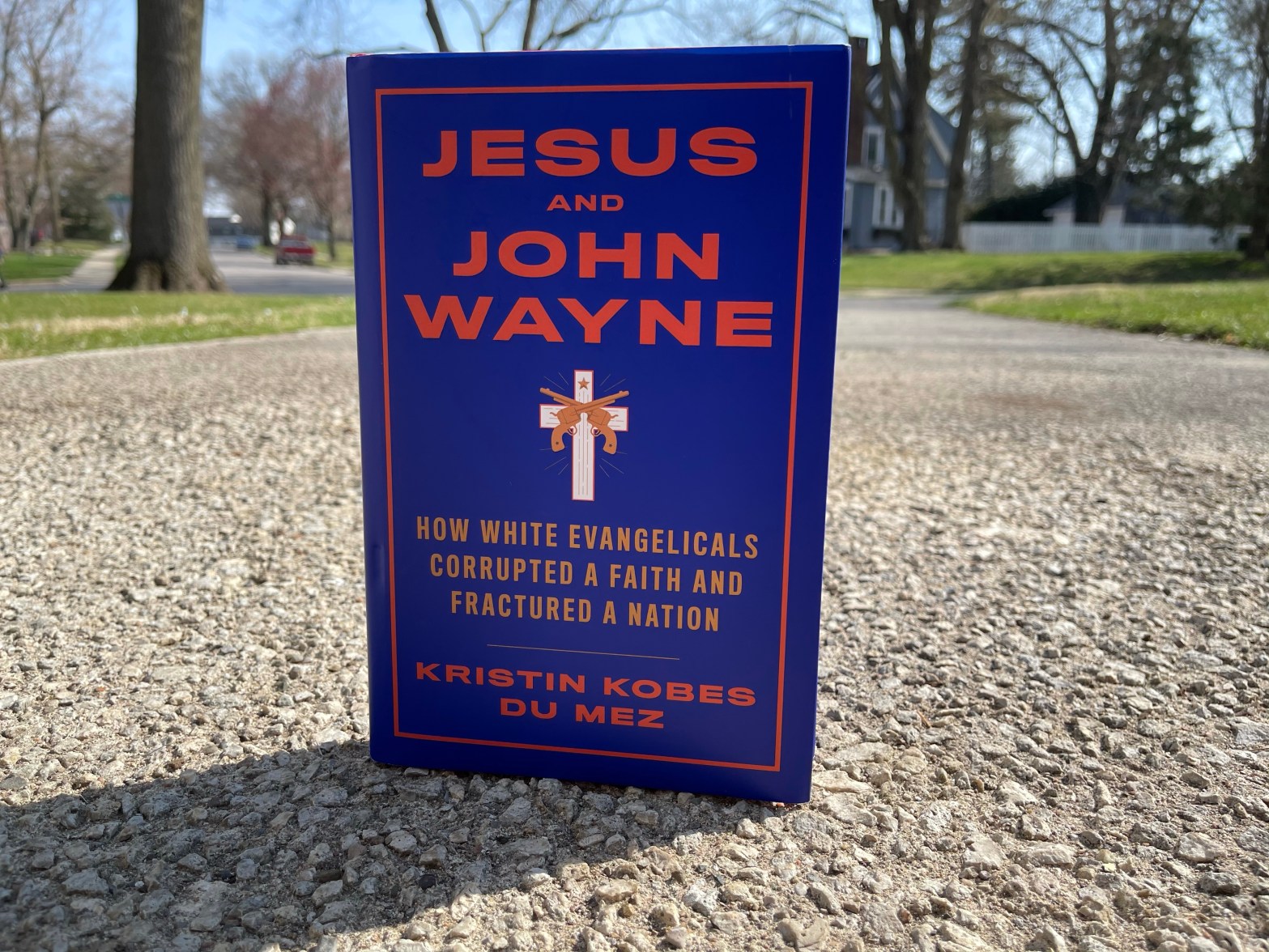
Pictured: Jesus and John Wayne: How White Evangelicals Corrupted a Faith and Fractured a Nation by Kristin Kobes Du Mez. You can buy the book here.

Have you ever had a moment where you learn some new piece of information and it totally changes your thought patterns? It doesn’t just change how you move on from that moment in time, it also changes your perception of the past. I recently had one of these moments after reading Jesus and John Wayne: How White Evangelicals Corrupted a Faith and Fractured a Nation by Kristin Kobes Du Mez. In her book, Du Mez chronicles not only the rise of the Moral Majority and the Religious Right but also the rise of militant masculinity in white evangelicalism over the past seventy years.

In Jesus and John Wayne, Kristin Du Mez writes about the men and women who created and helped foster this atmosphere of militant masculinity. From Jerry Falwell, Pat Robertson, and Tim and Beverly LaHaye to James Dobson, Mark Driscoll, and Eric Metaxas these men and women helped shape a generation of evangelical thought defined by racism, bigotry, sexism, homophobia, xenophobia, and Islamaphobia. If you are looking for an example of the thought patterns and ideologies that led 81% of white evangelicals to vote for Donald Trump in 2016 and another 75% in 2020, look no further than the men and women listed in this book.

For me, this book was extremely personal in a way I didn’t think was possible. From everything I had read on Twitter surrounding the book, I knew that it would be a hard, disturbing read for people, like me, who have been heavily involved in white evangelical culture. And, I was correct in my assumption. Each new chapter challenged me and caused me to look differently at popular figures in the white evangelical world than I had previously. As Du Mez traveled through the past seventy years of white evangelical history, I caught myself recognizing name after name. People and organizations that I am familiar with kept popping up in unexpected and horrible ways. As I read, I became filled with a sense of dread: what new evangelical leader or organization would show up next?

I’ve grown up deep in the white evangelical church. I’ve gone to church for as long as I can remember. Most of the people I know are white evangelicals. I’ve consumed significant amounts of media from Focus on the Family, the organization founded by James Dobson. I’ve listened to Jonathan Park, an audio show previously put on by Vision Forum an organization founded by Doug Philips and devoted to promoting the “biblical patriarchy” in the homeschool community. I’ve read a Dobson book and consumed many other forms of conservative Christian media from books and audio programs to movies and TV shows. I have attended churches with people deeply involved in purity culture and legalism. And, although my parents never ascribed to either, I know many who did.

As I read through Jesus and John Wayne, I began to realize the influence white evangelical culture and media had on me both consciously and subconsciously. And, as the layers were peeled back on issues like gender roles, LGBTQ+ rights, abortion, racial justice, immigrants, and Muslims I began to see how these issues had not only overtaken the Gospel, but become weaponized over the years to stoke fears and seize power. I thought back to discussions about Barack Obama’s birth certificate and other thinly-veiled conspiracy theories surrounding Muslims. I thought back to the strong outpourings of anger any mention of LGBTQ+ rights would elicit out of evangelicals. I remembered the ways abortion has been weaponized for political gain and used to shut down any dissent. I also recalled the ways women—including women I know—have been treated in churches. Women who were told that their place was “with the children” or among other women and not in the pulpit because God “doesn’t approve of women holding authority over men.”

As I read this book, the doubts I had about white evangelicalism began to grow. This wasn’t the first time I had experienced these feelings of doubt. About three years ago, my perceptions on faith and politics began to change. Having grown up in white evangelicalism and the culture molded around it, I naturally adopted the worldview and opinions of those who surrounded me. This involved taking on worldview and opinions that now, looking back, I am shocked that I ever ascribed to. One of my most vivid memories from this time in my life is from November 4, 2016. I’ll never forget the feeling of joy I had that morning when I woke up and saw that the presidential race had been called for Donald Trump. Our man had won. Hillary Clinton and her “radical” campaign had been defeated. We would now be safe from the government infringing on religious liberty. We had someone who would appoint conservative Supreme Court Justices and, as a result, hopefully, end abortion. All was well.

Except, all wasn’t well. My fifteen-year-old self had missed what 81% of white evangelicals had missed: Trump’s message was contrary to the gospel and he had no business representing American Christians or supposedly “championing” our faith or values. It wasn’t until over a year after the election that I began to think seriously about Trump and what he represented. I began having conversations with friends who were also beginning to question their stance on Trump and key political and social issues. We read about Trump and the things that he had said and done before and after he was in office. We shared stories about family and friends who defended Trump no matter what hateful or racist things sprung from his mouth. We discussed the things Trump stood for and came to the realization that these things were contrary to what we believed and we could no longer align ourselves with him or that brand of conservative Christianity that supported him no matter what.

After realizing these things, I was also beginning to discover that there were many other aspects of conservative Christian culture that I did not agree with. I didn’t agree with the horrible treatment of LGBTQ+ people, people made in the image of God and loved by him, and the hate that many Christians have toward them. And, as I read the numerous accounts of sexual abuse that have plagued white evangelical churches, the purity culture I’ve witnessed went from misguided in my mind to despicable. I didn’t agree with the way Christians were able to write off climate change as “ridiculous” or “something I don’t need to worry about.” And I didn’t agree with the caviler way immigrants and refugees were written off as “illegals who want to take our jobs and our country.”

Over the past couple of years, I’ve stepped further and further away from white evangelical culture. I became disillusioned by a group that claimed to be “pro-life” and yet were unwilling to wear a mask to a grocery store to protect their neighbors. I grew tired of pleas for racial justice being met with indifference or all-out opposition by white evangelicals. I was angry that the Black Lives Matter movement was simply labeled as “Marxist” or “communist” and dismissed because “we can’t support the Black Lives Matter organization” while systemic racism was either being completely ignored or treated as if it doesn’t exist. I was disheartened by white evangelicals who, after four years of Trump, took up his mantle again—with force— “for the sake of abortion” while seeming to care little for lives outside the womb or understanding what he stood for.

This past year, I’ve had serious discussions with white evangelical friends who believe that “systemic racism doesn’t exist,” claim that according to the Bible you can’t say “Black Lives Matter,” and say that people who resist arrest, like Rayshard Brooks, “are probably going to get shot.” Throughout these discussions, I’ve seen how truly ingrained white supremacy and racism are in many churches and individuals. In addition to this, as I have become more public in my views on Trump over the last year, many in my family have talked about me behind my back and insulted me. I have been called manipulative, my writing and thinking have been ridiculed, and I have been treated not as a person who is loved no matter what, but as someone who must be corrected and converted back to conservatism at all costs—no matter if it hurts. These family members are all Christians. We both follow the same savior who said that one of the greatest commandments is “to love your neighbor as yourself.”

As I’ve had these conversations, grieved these losses of closeness and love from my family, and seen some of the worst of white evangelicalism, I’ve had to reevaluate my faith. I’ve seen that white supremacy, Trumpism, and Christian nationalism have invaded large portions of white evangelicalism and I have spent considerable time trying to reconcile my faith with the words and actions of evangelicals who have been emboldened by Trump and his rhetoric over the last four years. I have seen and experienced some of the worst of American evangelicalism and it almost broke me.

But, at the same time, I’ve also seen some of the best of American evangelicalism. I know many Christians who have devoted their lives to the service of others, who love unconditionally and seek to show the true love of Christ. They also aren’t afraid to speak out on important issues and challenge established norms and power structures. I see people like Kristin Du Mez, Jemar Tisby, Phil Vischer, David French, and Justin Giboney fighting desperately for change in the American Church, grappling with the past, and striving for a better path forward and it gives me hope that things can be better one day.

These thoughts—and the background history from Jesus and John Wayne—have left me with a question: Where do we go from here? There has been a growing movement of ex-evangelicals (“exvangelicals” as they are often called) rising out of white evangelical churches. These exvangelicals, no longer able to reconcile their faith with the American church, are either leaving their churches or leaving the faith tradition altogether. In addition to this movement, there has also been an exodus of Black Christians from white evangelical spaces since 2016. Jemar Tisby, author of The Color of Compromise: The Truth about the American Church’s Complicity in Racism, has been leading a movement entitled #LeaveLOUD as a response to the quiet exodus of Black Christians from white evangelical churches. Through the #LeaveLOUD movement, Tisby encourages Black Christians to make it known why they are leaving white evangelical spaces (racism, Trumpism, Christian Nationalism, not feeling valued or appreciated as part of the community) instead of quietly exiting.

The topics of #LeaveLOUD and the exvangelical movement were recently addressed in an article by Kristen Du Mez in The Anxious Bench entitled “#LeaveLOUD and the Evangelical Reckoning.” I wanted to quote the end of the second to last paragraph and the last paragraph which fit perfectly with what I have been discussing:

“When it comes to institutions, however, I continue to see the active protection of existing power structures, persisting silence, and far too little courage exhibited in the face of those entrenched powers.

#LeavingLOUD plays a vital role in revealing dynamics that often remain hidden—dynamics that must be brought into the light. Depending on the circumstances, #StayingLOUD can do the same thing. But silence in leaving or remaining will only allow these patterns to persist. It is long past time for white evangelicals to call out injustice, bigotry, violent rhetoric, disparaging language, racism, misogyny, abuse of power, and the idolatry of Christian nationalism in their own communities, even if doing so comes at a cost. The cost of not doing so is undeniable, and it is a cost largely born by others.”

As seen in Jesus and John Wayne, white evangelical power structures are strong. They have been built up over many years and it will take speaking out against them to create true, lasting change. But, staying silent on key issues in churches will only perpetuate problems and, as Du Mez says, the cost of that will largely be born by others.

I’ve talked a lot in these last couple of paragraphs about the “us” but I haven’t focused on where all of this leaves me. To be honest, I don’t exactly know where to go from here. I still love Jesus. I still believe in the hope of the Gospel and the truth of the Bible. I seek to carry out the true mission of the church, not the culture wars mission that seeks to keep prayer in schools or keep God on our money. But, at the same time, I am weary. I don’t know if I can continue in these places or environments where new thoughts or ideas are treated as a threat, racial justice and other important issues are all out ignored or replaced with the “but abortion” narrative, and where the people of Christ don’t show his love or care for others—even in their own family. I can’t in good conscience stand by while racism, misogyny, xenophobia, and Christian nationalism are allowed to persist. I am not the same person I was in 2016 and I never will be. That chapter of the toxic influence of white evangelical culture on my life is over—for good.

But, I don’t think I can leave—at least not yet. Amid all this toxic ideology, I still find hope. As I look at my friends and others in my generation, I see a generation of people who see through insincerity and dangerous power structures in the church. They care deeply about people and desire to protect life in all its forms. They seek to make the church a place where everyone is welcomed, valued, and loved—not for their possibility of conversion—but for the whole person that they are. I see hope in them. And because of that hope, I believe there is still something in the American church worth fighting for and that there is a better path forward. I don’t exactly know what that path looks like or what the future holds, but, in this moment, I remain here, speaking out and attempting to forge a new legacy. The church doesn’t have to be this way. White evangelicalism doesn’t have to be this way. It’s as Kristin Du Mez says in the conclusion of Jesus and John Wayne: “What was once done might also be undone.” But only if we #LeaveLOUD or #StayLOUD.

Don’t Let Rush Limbaugh’s Death Strip You of Your Humanity

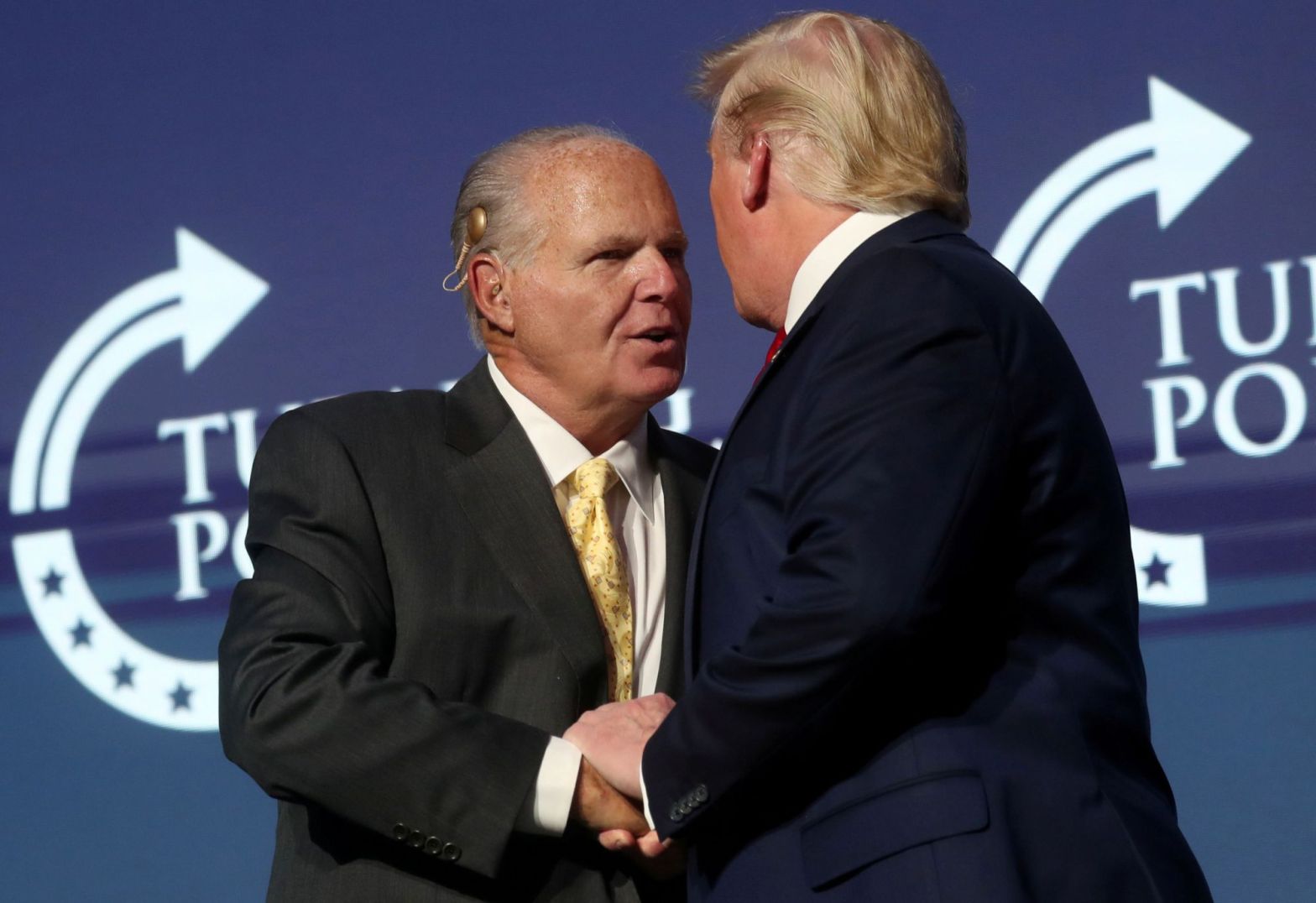
Former U.S. President Donald Trump greets Rush Limbaugh before delivering remarks at the Turning Point USA Student Action Summit at the Palm Beach County Convention Center in West Palm Beach, Florida, U.S. December 21, 2019. REUTERS/Leah Millis/File Photo

As someone who grew up surrounded by many conservatives I was familiar with Rush Limbaugh from a young age. Many people in my family listened to him (whether frequently or infrequently) and many other people I know were casual listeners. I’ve heard some of his program on and off over the years. When I was younger, I remember thinking that his program was a little odd—but in a funny way. Here was this guy on the radio yelling about random people, going on long rants, and making odd references to “feminazis” and something called “the Rock Hudson disease.” I didn’t really understand him, but most of the people I knew seemed to enjoy him.

Years down the road, as my views started to change and I learned more about Rush, I realized the truth about him. I’ve read about his radio segment called “AIDS Update” where he mocked people who had died from AIDS, playing music as he read their names over the air. Limbaugh ended the segment after two weeks and referred to it as “the single most regretful thing I’ve ever done.” I read about his open misogyny when he labeled Sandra Fluke, a Georgetown law student who testified in congressional hearings in support of an Obama administration policy that required health insurance plans to cover contraceptives for women, a “slut.” He later apologized for the “insulting word choices.” I read about his quote from 2004 on the NBA: “I think it’s time to get rid of this whole National Basketball Association. Call it the TBA, the Thug Basketball Association, and stop calling them teams. Call ‘em gangs.” More recently, I’ve seen Limbaugh compare COVID-19 to the “common flu” claiming that it was “being weaponized as yet another element to bring down Donald Trump” and float the baseless conspiracy theory that the 2020 U.S. Presidential Election was “stolen” from Donald Trump.

Limbaugh built his career on fear and divisiveness. He consistently demonized those on “the other side” and, even worse, gave his millions of listeners permission to fear and hate their enemies—at least those they perceived to be their enemies. I’ll never forget the call-ins I heard from listeners eager to have Rush affirm their views or conspiracy theories about the “evil democrats.” They looked to their champion, the embodiment of the “Make America Great Again” ideology before Trump was even a thought for president, for his stamp of approval.

My purpose with this article is not to chronicle every racist, misogynistic, or homophobic thing that Limbaugh said. Instead, I write these so we can truly get an accurate picture of who Limbaugh was and what he stood for. Since his death, I have seen people, many of them Christians, praising Limbaugh as a “great man and patriot.” This glamorizes him as a champion of conservatism, but it fails to capture his true being. The reality is that Limbaugh was a man who spent his career dividing people and spreading hate and giving his listeners license to do the same. Limbaugh may have done great things for veterans and military members, but that does not make up for the damage done by his words and actions.

But, on the other hand, I have seen something just as disturbing as the things Limbaugh said: the reaction to his death. When the news of his death first broke, many were openly cheering and celebrating. I get it. When someone hurts us, whether with words or actions, we want to lash out against them and make them truly suffer. To revel in their pain. To see them and those they love suffer as much as we have. It’s a part of our human nature. But in the process of this, we lose our humanity. We forget that Limbaugh was just another man like us. He had a family. He had a life beyond his radio career. We also forget that he didn’t spew his hate into a void; millions of people listened to him and supported him. He may have helped push them over the edge, but at the end of the day, they chose to listen to him. They are as much a part of the problem as he was.

I understand the hurt and frustration. I’ve seen many members of my family fall victim to the conservative media machine headed by Limbaugh. I also know that as a straight white man from Indiana, I can never truly understand the hurt he caused people of color, women, and members of the LGBTQ+ community. But, in looking at the replies and reactions to his death, I was deeply unsettled and horrified. Many of these people who mocked his death are the same people who fight for human rights and racial justice and advocate for the poor and marginalized. If we can care about other humans and affirm their human dignity, we must affirm the human dignity of everyone—including people who have hurt others and maybe even us. That doesn’t mean that we need to forget what he said or the harm he caused, but it means that we need to do what Limbaugh would never do: show grace and compassion to our enemies. It doesn’t mean that we can’t be relieved that his negative influence over millions of Americans has gone with him, but we shouldn’t actively wish death on anyone or even rejoice in their suffering or death.

Let us work to dismantle Limbaugh’s legacy. Let us work to overcome the hate that he nourished and to reach out to those who don’t think like we do or believe the same things we do. To borrow an extremely overused but great Martin Luther King Jr. quote: “Darkness cannot drive out darkness; only light can do that. Hate cannot drive out hate; only love can do that.” Let us drive out the darkness and hate with light and love. Don’t let yourself fall into the same trap of hate that Limbaugh and millions of others have fallen into. Because from the times I have listened to Limbaugh, I know that he wouldn’t have looked at the response to his death in anger or sadness. Instead, he would have looked at the responses with joy because he would know that he and his brand of hate had won in the end. And he would be right.

Some Thoughts on the Insurrection at the U.S. Capitol

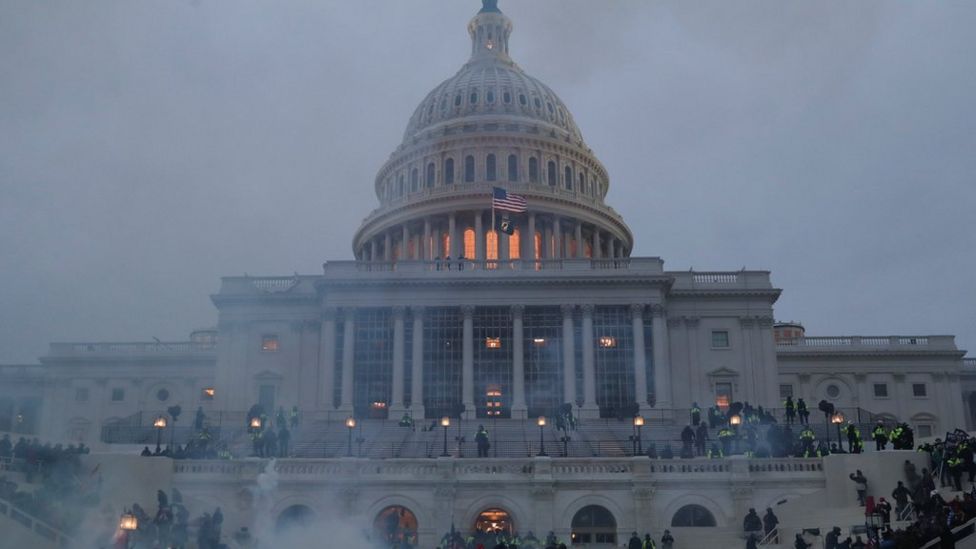
Dusk sets on the U.S. Capitol on January 6, 2021 after a long day of riots. Image source: BBC.

Over the past couple of days, I’ve sat down many times to write something about the events that unfolded in Washington D.C. last Wednesday. I’ve written many things about the events that transpired there but none of them felt right.

Here are the facts: On January 6th, 2021, domestic terrorists sporting Trump flags, Confederate flags, and weapons breached the U.S. Capitol. The last time the Capitol building was invaded was 1814 during the War of 1812. During this attempted coup on Wednesday, five people died and several more were injured. The Senate floor was overrun and there was an attempt to breach the House chambers. Members of the House, Senate, and Vice President Mike Pence were evacuated to a bunker. These domestic terrorists were incited by President Trump and his allies and attempted to take over the government and subvert the results of the recent U.S. presidential election.

As I watched these events unfold live on Twitter on Wednesday, I became angry. I still am angry, but this anger has been mixed with other emotions. I am also deeply saddened and horrified by what transpired. I am angry that the President of the United States incited the mob that marched on the Capitol. I am horrified by the domestic terrorists (many of them Christians) who carried out these violent acts. I am saddened by the fact that Black Lives Matter protestors wouldn’t have received the same treatment as the hoards of white Americans who ascended the steps to the Capitol. And, I am angry with the lawmakers and media groups that supported Trump over the past two months while he spouted lies about election fraud.

These events have caused great anger among many Americans. But, I believe we can also find hope in the midst of this. Before we get to the hope, we need to address the anger. Why are we angry? Who is responsible for this siege of the Capitol? In this essay, I have broken down the two key groups who are responsible for this attack: the domestic terrorists who carried out this attack and the president and his allies who incited it.

First, let’s look at the mob of domestic terrorists who breached the Capitol. These people have been called many things over the past day from protestors to rioters to “Antifa disguised as Trump supporters.” But make no mistake, these people were without a doubt radicalized Trump supporters and white supremacists seeking to take over the government and overturn an election that was won fairly by Joseph R. Biden.

A man waves a “Tump is my president” flag inside the Capitol. Image source: BBC.

There are many layers to this group of people. Some may say that they are not to blame for their actions because they were just following what they had heard from their leaders, but this narrative eliminates the element of personal responsibility. While these rioters were almost certainly antagonized by Trump and his allies, they decided to break the law. They alone are responsible for this. They decided to commit this act of insurrection. And, as a result of their actions, they must be prosecuted to the fullest extent of the law.

There is also significant evidence emerging that these attacks were planned and premeditate. Many of these domestic terrorists didn’t act on the spur of the moment. Careful planning and organizing had been done weeks in advance as outlined by Sheera Frenkel in a recent podcast episode of the “The Daily” by The New York Times. Many of these people did not come to Capitol Hill to peacefully protest, they came to wreak havoc.

There is also another layer to this first group of people and that is their blatant display of white privilege. If you don’t believe that white privilege exists, compare the events of yesterday to the Black Lives Matter protests from last year. Peaceful protestors last summer were tear-gassed and forcibly removed from a church in D.C. so that the president could have a photo op. The people at the Capitol were also tear-gassed eventually, but only after they had been allowed to roam the Capitol building invading the offices of members of Congress as well as the Senate and House floors. Many of these rioters walked out of the Capitol unscathed and are still free today. One of them even stole a laptop from Nancy Pelosi’s office and walked right out of the door with it. While Capitol Police were certainly overwhelmed, the lack of response to these domestic terrorists is shocking when compared to the literal tanks that were deployed last summer to respond to Black Lives Matter demonstrations. This double standard is even clearer when it comes to the president. Last summer, black people, fighting for racial justice, were called “thugs,” “terrorists,” and “anarchists” by the president. Two days ago, this same president called those who stormed the Capitol “very special” and ended his message to them saying “We love you.” We can debate whether the looting and burning of a Target and other businesses is a greater or worse crime than invading and vandalizing the U.S. Capitol with intent to murder, but the fact stands that these “protestors” in D.C. on Wednesday were treated much differently than their black counterparts were last summer.

The actions of these insurrectionists are unacceptable and inexcusable. The way they were treated compared to the Black Lives Matter Protestors is also unacceptable. The insurrectionists in D.C. were attempting to overthrow the government in an attempt to upend the U.S. Presidential election. The protestors last summer were protesting police brutality and systemic racism. To treat these events as equals or to excuse the actions of the Capitol rioters while condemning Black Lives Matter protestors is an injustice that cannot be left unaddressed.

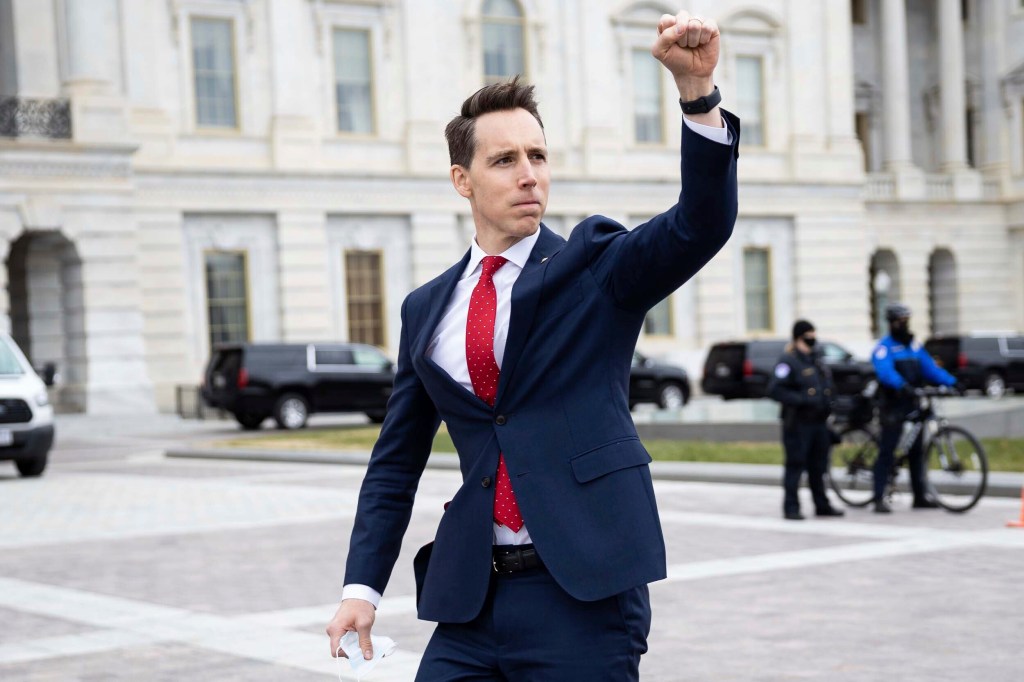
Senator Josh Hawley (R-MO) gestures to a crowd of Trump supporters outside the U.S. Capitol shorty before they breached the Capitol. Image source: NBC News.

Now we arrive at the other culprits: the President and his allies. First, before we dive deeper into the President, we must address those who supported him throughout all of his lies. Sens. Josh Hawley (R-MO) and Ted Cruz (R-TX) have been complicit in spreading and the president’s lies and must resign or be removed. Peggy Noonan describes the recent actions of these men well in her recent WSJ Opinion:

To the devil’s apprentices, Sens. Josh Hawley and Ted Cruz. They are clever men, highly educated, well-credentialed, endlessly articulate. They see themselves as leading conservative lights, but in this drama they have proved themselves punks practicing punk politics. They are like people who know the value of nothing, who see no frailty around them, who inherited a great deal—an estate built by the work and wealth of others—and feel no responsibility for maintaining the foundation because pop gave them a strong house, right? They are careless inheritors of a nation, an institution, a party that previous generations built at some cost.

These men knew the law and they chose to ignore it in exchange for cheap political points. In addition to Ted Cruz and Josh Hawley, every one of the 122 members of the House who objected to the certification of the Electoral College votes and riled up their constituents with inflammatory rhetoric about “stolen elections” must resign or be removed. These lawmakers are knowledgeable in the area of constitutional law. They knew what they were doing was wrong and unethical, but they chose to do it anyway. They incited these insurrectionists in one breath and then condemned them with the next. They are wholly unfit to lead our country and are no longer deserving of the positions and titles they hold.

Now we arrive at the man himself: Donald J. Trump. The chief instigator of the chaos and violence at the Capitol. They told us character didn’t matter. They told us “that’s just his personality.” They told us you have to look at what he does and not what he says. They were wrong. Character matters. Words matter. In 1792, Alexander Hamilton outlined the type of person who would be destructive to our Republic:

“When a man unprincipled in private life desperate in his fortune, bold in his temper, possessed of considerable talents, having the advantage of military habits—despotic in his ordinary demeanour—known to have scoffed in private at the principles of liberty—when such a man is seen to mount the hobby horse of popularity—to join in the cry of danger to liberty—to take every opportunity of embarrassing the General Government & bringing it under suspicion—to flatter and fall in with all the non sense of the zealots of the day—It may justly be suspected that his object is to throw things into confusion that he may ‘ride the storm and direct the whirlwind.’”

This almost perfectly summarizes Donald Trump. He is a man without character, without morals, and unfit to hold the office of president. This was on full display on Wednesday when he instigated the mob of his supporters to march on the Capitol. This wasn’t just the result of a speech on Wednesday, this was months in the making. Over the past two months, he has lied continuously about the results of the election often claiming that he won “in a landslide.” He has been standing firmly at the helm of the “Stop the Steal” movement since November 7, 2020, when the election was called for Joe Biden. He has spent weeks inciting his supporters to violence if things didn’t go their way. A good example of this behavior is a tweet from December 19th where he said it was “Statistically impossible to have lost the 2020 election” and that there will be a “Big protest in D.C. on January 6th.” He further told his supporters in that tweet, “Be there, will be wild.”

To those who stood in his way on this road to “victory” (Brad Raffensperger, Bill Barr, Brian Kemp, and more recently Mike Pence) Trump mercilessly called them out on Twitter demanding their cooperation in his schemes…or else. But that is the Trump way. You are either loyal or disloyal. There is no middle ground.

U.S. President Donald Trump speaking at a rally in D.C. on January 6, 2021. Image source: CNBC.

Even after the attempted coup on Wednesday and the reports of shots fired and injuries, Trump couldn’t resist inciting his followers further by recording a video message encouraging them to stand down while also continuing his claims that “we had an election that was stolen from us.” This lead to Twitter initially banning his account for 12 hours and eventually banning him permanently from their site. Facebook, Instagram, and many other companies have followed Twitter’s lead and rescinded access to the president’s accounts permanently or “indefinitely.”

Trump is a reckless man full of hatred and malice. He subverts the truth at every turn and lies constantly. He does not care about you. When he says “we” he means you. He didn’t march up the steps of the Capitol with his supporters as he said he would. Instead, he sat at home watching it unfold on live TV. Trump cares only about himself and he is willing to ignore the casualties of his actions and inflammatory words as long as he gets his way.

This is the last stop of the Trump train. His sins have come to find him out and his empire of lies and deceit is crashing down around him in spectacular fashion. The time for saving face and continuing with him on this dark path has passed. It is time to wake up to the reality of what has occurred and reverse course. If the attack on the Capitol and the five people that died as a direct result of his lies don’t wake you up to the reality of the man that is Donald Trump, nothing ever will.

Only 10 days are remaining in Trump’s presidency, but the choice is clear: he must be removed from office through the 25th amendment or impeachment. Much damage can still be done in these 10 days. This is not a partisan issue, Trump has threatened the life of our Republic with his lies, inflammatory words, and dangerous behavior. If he is not held accountable for his actions and words, it will be a disgrace to our country and democracy overall.

But even in the midst of all of this chaos over the past week, there is still hope. Joe Biden will be elected the 46th President of the United States on January 20th. There is nothing Trump or any of his supporters (citizens or politicians) can do to change that. Biden is not perfect, but he has something Trump lacks: character. This is not to say that Joe Biden will solve all our problems. He won’t. Presidents can influence society, but they cannot solve all of its problems. Besides, Trump is only a symptom of a greater sickness that has infected America long before he announced his candidacy in 2015. His removal from office will not solve the problem. There will be many hard days ahead full of much pain. But, with his removal from office, we will have stability in leadership and time to address our issues without constant gaslighting from the president.

So, how can I end this article? I honestly don’t know. The events of the last week have brought us to our knees. Trump has inflicted great pain on our nation. His supporters have attacked the fundamental principles and symbols of our democracy. We are angry. We are horrified. And, we are deeply saddened. These emotions are okay. It is justified to feel anger at what they have done, but if we hold onto our anger and turn it into hate we are no better than the president and his supporters. We will have let hate rule our hearts and they will have won. Fight for justice to be done. Hold those who perpetrated this attack accountable. Never forget that words have real-life consequences and that character really does matter. Use these emotions of anger and sadness to push you toward action and not toward hate. The road ahead is long, but we will endure. Somehow.

They Are More Than Numbers

Numbers are just numbers. Deaths statistics are just statistics. We often gloss over these numbers because we can’t comprehend the amount of death. On December 16th, 2020, 3,611 people died from COVID-19. 3,611 people who had families. 3,611 people who will no longer be around for Christmas. Pastor Kent (pictured above) was one of those 3,611 people who died on December 16th.

Even though I worked on staff with Pastor Kent at Brookside for five years, I didn’t know him that well. He was one of those people that I saw in the hallway and said “Hi” to or struck up a short conversation. I didn’t know him very well, but I knew him. One of the things I remember about him is a phone call in January 2018. After my Grandpa passed that January, Pastor Kent called my dad and left a voicemail offering his condolences and saying a prayer for him and our family. It was a simple act, but it meant a lot—especially during a time of loss.

When we see these COVID deaths, we don’t see the full story behind the people who have died. We don’t see their faces, and we don’t hear their stories. They become another statistic, and we move on with life. And, in the process of this year, I feel like this has caused us to lose our humanity. We brag about flouting guidelines or choose to ignore them because it’s “government overreach,” and we don’t want to be inconvenienced. We criticize those who obey these guidelines and label them as “sheep.” We demean those who don’t agree with us politically, and we write off their conviction to wear a mask and obey guidelines as “being brainwashed by the media.”

But, in the process of all of this, we lose our focus. We ignore the deaths. We ignore the hospitals that are running short of beds. We choose not to see the nurses and doctors who have barely been staying above the water these past nine months. We no longer see this as a medical emergency that is affecting all of us. Our friends. Our neighbors. Our families. And, most of all, we forget our compassion. We forget our human decency. We forget our love.

As you make your plans for Christmas this year, remember the families who are grieving. Remember that the deaths are not just numbers. They are people too. And if you can, avoid gatherings this Christmas. If you do gather, wear a mask and distance. This has been a hard year and we are likely looking toward a few more hard months full of many cases and deaths. So please, do your part for the sake of your community and those you love.

Be careful. Stay safe and healthy. Love others through both actions and words.

Thanksgiving, Job, and Suffering

2020 has been a long year. From the global pandemic that has raged through our world and claimed the lives of 250,000+ Americans, to the deaths of George Floyd and Breonna Taylor and the nationwide protests that followed, and more recently to an election that divided our nation and set families and friends against each other. This has been one of the hardest years many of us have experienced. Just when things are starting to look up, something always seems to go wrong.

As Thanksgiving approaches, many of us are pondering what the holiday will look like this year. We aren’t just thinking about whether or not to gather for a traditional meal as COVID cases spike across the United States, we are also wondering what we even have to be thankful for. Some of us have lost loved ones to this disease, some have lost jobs, and others have lost their homes. Many are alone and feeling the loss of connection to their family, friends, or neighbors. Most days it doesn’t feel like there is much to be thankful for this year.

Is it possible to be thankful in the midst of suffering and misery? Or, an even tougher question — is it possible to be thankful for the suffering itself? As we contemplate this last question, let’s look at the story of Job from the Bible. Job was a man who was “blameless and upright”; he “feared God and shunned evil.” (Job 1:2) Because of his faithfulness, God had blessed him. He had a large family, many servants, and an abundance of livestock. But, one day Satan came to God with a proposal regarding Job. He claimed that Job only feared God because of what God had done for Job and how he had protected him. Satan claimed that if God would stretch out his hand and “strike everything he (Job) has, he will surely curse you to your face.” So, in chapter one, verse fifteen it says: “The LORD said to Satan, ‘Very well, then, everything he has is in your power, but on the man himself do not lay a finger.’ Then Satan went out from the presence of the LORD.”

The events that transpired next are shocking and saddening beyond belief. All of Job’s oxen and cattle were stolen and his servants who were guarding them were killed, save one. Fire from heaven came down and burnt up all of Job’s sheep and his servants who were with them, except for one. The Chaldeans stole all of his camels and killed all but one of his servants. All of his sons and daughters were killed in their older brother’s home when a wind swept through the desert and collapsed the house on top of them. Tragedy upon tragedy befell Job — all in one day.

So, what was Job’s response? Did he fall to the ground and curse God as Satan had predicted? No. Instead, he fell to the ground and said these words: “Naked I came from my mother’s womb, and naked I will depart. The Lord gave and the Lord has taken away; may the name of the Lord be praised.” Job’s first act after learning of the terrible tragedies that had befallen him that day was to worship God.

Job wasn’t perfect, however. Over the course of the book, he fights anger, bitterness, and resentment because of what God has allowed to happen to him. Things eventually turn around for Job, and God blesses him for his faithfulness to him, in spite of all he went through. After enduring much suffering, Job received more blessings from God than he had before.

When I thought about Thanksgiving this year, this first thing that came to mind was the story of Job. Here is someone who, over the course of a day, lost all that he had: his livestock, his servants, and his children. But, in the midst of all of this suffering and loss, the first thing Job did was fall to the ground and praise God. Honestly, if it was me, I wouldn’t have responded the same way Job did. I would have found it very hard to praise God in the midst of great suffering. Even today, it is hard to praise God during a time when we are separated from family and friends and facing many hardships.

One of the things that I particularly like about this biblical account of Job’s life is the realistic presentation of Job’s anger and fear. Yes, he praised God, but he also struggled over the course of the book with fear and anger. I appreciate this because it shows Job’s humanity. It shows that it is okay to be angry or afraid. What matters is how we respond to these emotions. Job chose to respond to these emotions in an unconventional way. Instead of letting fear and anger control him or allowing his suffering to rule his thoughts, Job used them to propel himself toward his Lord. As Laurie Nichols says in her article on Job and Thanksgiving: “His suffering lifts his eyes to his redeemer, and to a picture of the future that nearly (if not fully) leads him into a spirit of Thanksgiving. When all has been stripped away, still he has his Lord.”

As Christians, let us be thankful this Thanksgiving, even in the midst of our suffering. Let us not be ashamed if we are fearful or angry, but let us use these thoughts and emotions to propel us toward a closer communion with God and deeper sense of empathy towards those around us who are also going through the same things. After all, what hope does the world have if it looks at the church and our response to suffering and only sees anger, fear, and misery — but no hope? Suffering, fear, and pain are natural parts of life. The question is, how do we deal with them? Do we focus solely on them, or do we use them to propel us toward a closer union with God and a spirit of Thanksgiving no matter what the circumstances?